
Exercise snacks are short bursts of movement – typically one to two minutes – repeated several times throughout the day: a flight of stairs taken quickly, a set of chair squats between meetings, a brisk lap of the parking lot. No gym, no clothes change, no schedule. They’ve become 2026’s most talked-about wellness trend, and for workplaces they may be the most practical one yet.
This is because they’re the first fitness habit that fits inside a workday instead of competing with it. Here’s what the research actually shows, and how employers can turn a viral idea into a program that sticks.
Why “Exercise Snacks” Are Suddenly Everywhere
The idea has been circulating in exercise science for years, but it broke into the mainstream as hybrid work made the 60-minute gym session harder to schedule and sitting time climbed.
The appeal is obvious: the biggest barrier to workplace fitness has never been motivation on January 2nd – it’s friction on a random Tuesday. Exercise snacks remove nearly all of it. There’s nothing to buy, nothing to book, and no point in the day where a two-minute burst is truly impossible.
For employers, that’s the difference between a wellness perk a few people use and a habit an entire office can share.
Do Exercise Snacks Actually Work?
What the research supports: this isn’t just a social media rebrand of “take the stairs.” A large wearable-device study published in Nature Medicine found that just three to four one-to-two-minute bursts of vigorous everyday activity per day were associated with substantially lower all-cause and cardiovascular mortality – in people who did no formal exercise at all. Smaller studies on “movement snacking” report improved cardiorespiratory fitness, better blood-sugar control from brief movement every half hour, and sharper afternoon focus.
What they won’t do: exercise snacks don’t build meaningful strength, fix posture problems from eight seated hours, or replace a structured program for employees managing weight or health conditions. And intensity matters – a stroll to the printer doesn’t count; the burst should leave you slightly breathless. Think of snacks as the floor of a workplace movement culture, not the ceiling.
10 Exercise Snacks That Work in Any Office
Each takes 30 seconds to 2 minutes. Aim for four or five spread across the day:
- Stair intervals – take two to three flights at a brisk pace instead of the elevator.
- Chair squats -stand up and sit back down slowly, 10–15 times, without using your hands.
- Desk push-ups – hands on the desk edge, body at an angle, 10–15 reps.
- Wall sit – back flat against the wall, thighs parallel to the floor, 30–45 seconds.
- Calf raises – while the coffee brews or the printer runs.
- Brisk hallway or parking-lot lap – fast enough that talking gets harder.
- Walking lunges – down a longer hallway (pick a quiet one).
- Shoulder rolls and doorway chest stretch – the antidote to keyboard posture.
- Seated leg lifts – extend and hold each leg under the desk, 10 per side.
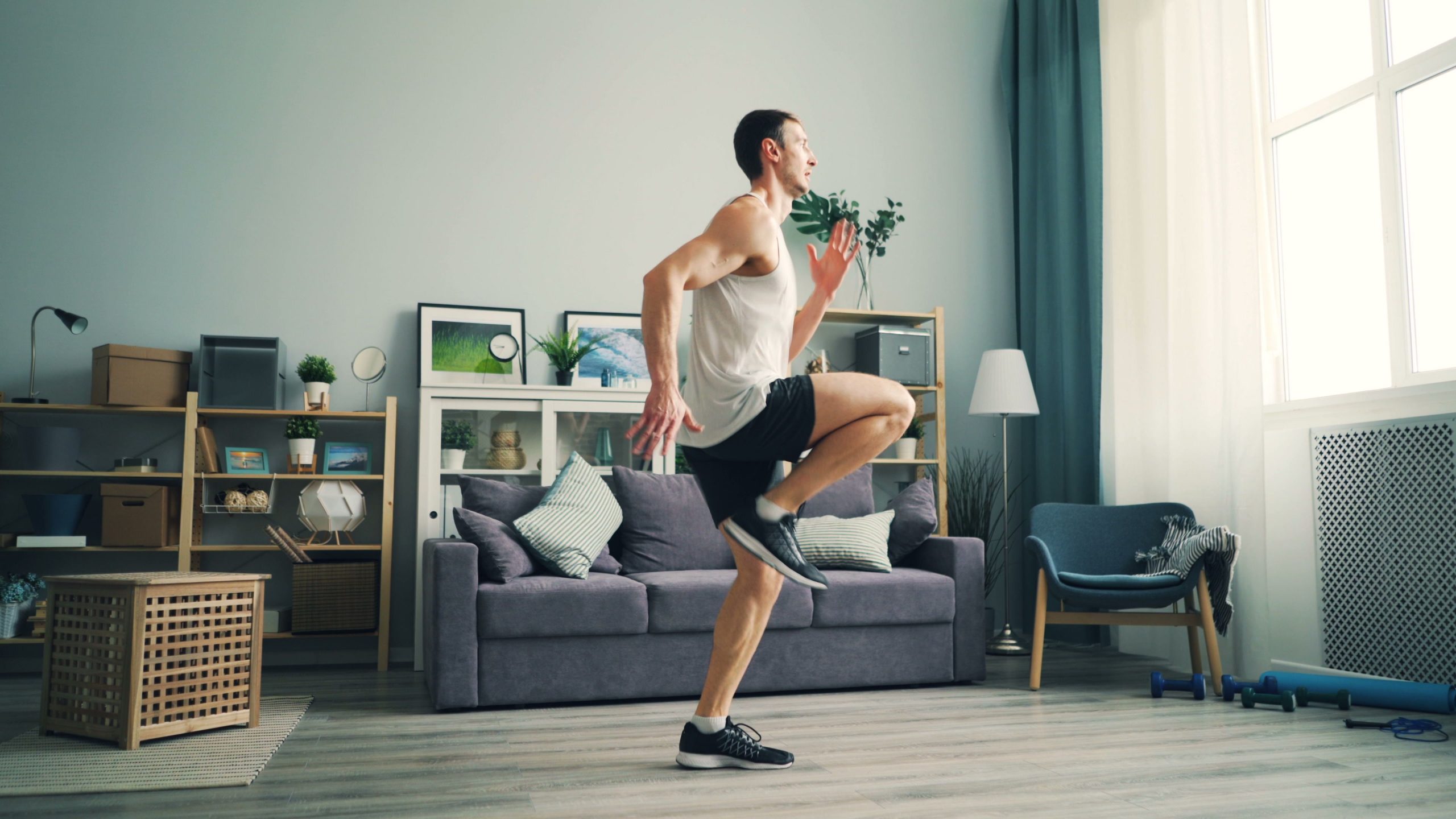
- “Meeting bookends” – 20 squats or high knees before joining each video call.
How Employers Can Turn a Trend Into a Culture
The trend fails when it’s a poster in the break room. It works when leadership makes movement visibly normal.
The playbook of success: leaders snack first and in the open; meetings over 45 minutes get a built-in two-minute movement break; teams run light-touch challenges (a shared tally of daily snacks, not a surveillance app); and stairwells and hallways are treated as fitness infrastructure – clean, lit, and encouraged.
Here’s how exercise snacks compare with the other common options on an employer’s menu:
| Approach | Cost to employer | Employee effort | What it does best |
| Exercise snacks | Essentially free | 1–2 minutes, several times a day | Daily energy, focus, and habit-building for everyone |
| Walking meetings | Free | Low | Light activity plus better conversations |
| Gym stipends | Per-employee monthly cost | High – usage typically low | Rewards the already-active minority |
| Structured wellness program | Scales with scope | Low – it comes to them | Measurable outcomes, culture change, retention |
The table interpretation: exercise snacks are the cheapest, most democratic starting point – and they’re also the on-ramp, not the destination. Energy and focus improve within weeks, and that’s exactly when teams get curious about what structured support could do.
That’s where a corporate wellness program picks up: baseline fitness assessments so improvements are measured instead of guessed, trainers who come to your office, and programming that turns two-minute habits into lasting health outcomes.
We’ve written before about what workplace wellness programs deliver and how an organization’s commitment to wellness pays off in retention and morale.
Frequently Asked Questions
What counts as an exercise snack?
Any deliberate burst of movement lasting roughly 30 seconds to 2 minutes that noticeably raises your heart rate or works your muscles – stairs at pace, squats, brisk walking, desk push-ups. Frequency is the point: several snacks spread across the day beat one long one.
How many exercise snacks a day should employees aim for?
Research points to three to five per day as the sweet spot – enough to show measurable cardiovascular benefit while staying effortless to schedule. A snack every 90 minutes to two hours of desk time is an easy rule of thumb.
Can exercise snacks replace regular workouts?
No – they’re a powerful supplement, not a substitute. Snacks maintain energy, metabolic health, and momentum, but building strength and fitness still requires structured training. The best results come from doing both.
Do exercise snacks work for remote and hybrid teams?
They’re arguably best for remote teams, since nobody’s watching and the kitchen counter works as well as a hallway. Shared team challenges and movement breaks built into video calls keep the habit social across locations.
How can a company encourage exercise snacks without it feeling forced?
Model it from the top, build it into meeting culture rather than policy, and keep tracking voluntary and lightweight. Movement should read as permission, not surveillance – the moment it feels mandatory, participation quietly dies.
Want the nutrition meets fitness program version with measurable results? Five Diamond designs corporate wellness programs for DFW employers – assessments, on-site training, and programming your team will actually use. Request a consultation.
References
Stamatakis, E., et al. “Association of wearable device-measured vigorous intermittent lifestyle physical activity with mortality.” Nature Medicine, 2022.
“Do stair climbing exercise ‘snacks’ improve cardiorespiratory fitness?” Applied Physiology, Nutrition, and Metabolism, 2019.
“Exercise snacks are a time-efficient alternative to moderate-intensity continuous training for improving cardiorespiratory fitness.” Applied Physiology, Nutrition, and Metabolism, 2024.
“Rx for Prolonged Sitting: A Five-Minute Stroll Every Half Hour.” Columbia University Irving Medical Center, 2023.
“Breaking Sitting Streaks.” American Diabetes Association.
“Exercise in the workplace: examining the receptivity of practical and time-efficient stair-climbing ‘exercise snacks.'” Applied Physiology, Nutrition, and Metabolism, 2023.
Robinson, B. “5 Reasons ‘Snack-Sized Workouts’ Are The Hottest 2026 Wellness Hit.” Forbes, April 2026.

Heather Cavanaugh is a fitness and wellness writer specializing in nutrition, training, and everyday healthy living. She writes for Five Diamond Fitness & Wellness, a boutique fitness and wellness studio in Farmers Branch, TX, where she turns the expertise of the studio’s trainers, registered dietitian nutritionist, and licensed massage therapist into practical advice readers can actually use. Her writing focuses on cutting through fitness fads to what genuinely works – sustainable nutrition, smart training, and recovery that’s treated as part of the plan.